What Camel Trekking in Dubai Involves
For millennia before paved highways, motor vehicles, or aviation transformed the Arabian Gulf, the dromedary camel was the indispensable lifeline of the desert. Known as the Ship of the Desert, camels enabled nomadic Bedouin tribes to traverse vast expanses of shifting sand, transporting families, trade goods, frankincense, and textiles along historic trade routes between Oman, the Emirates, and the Levant.
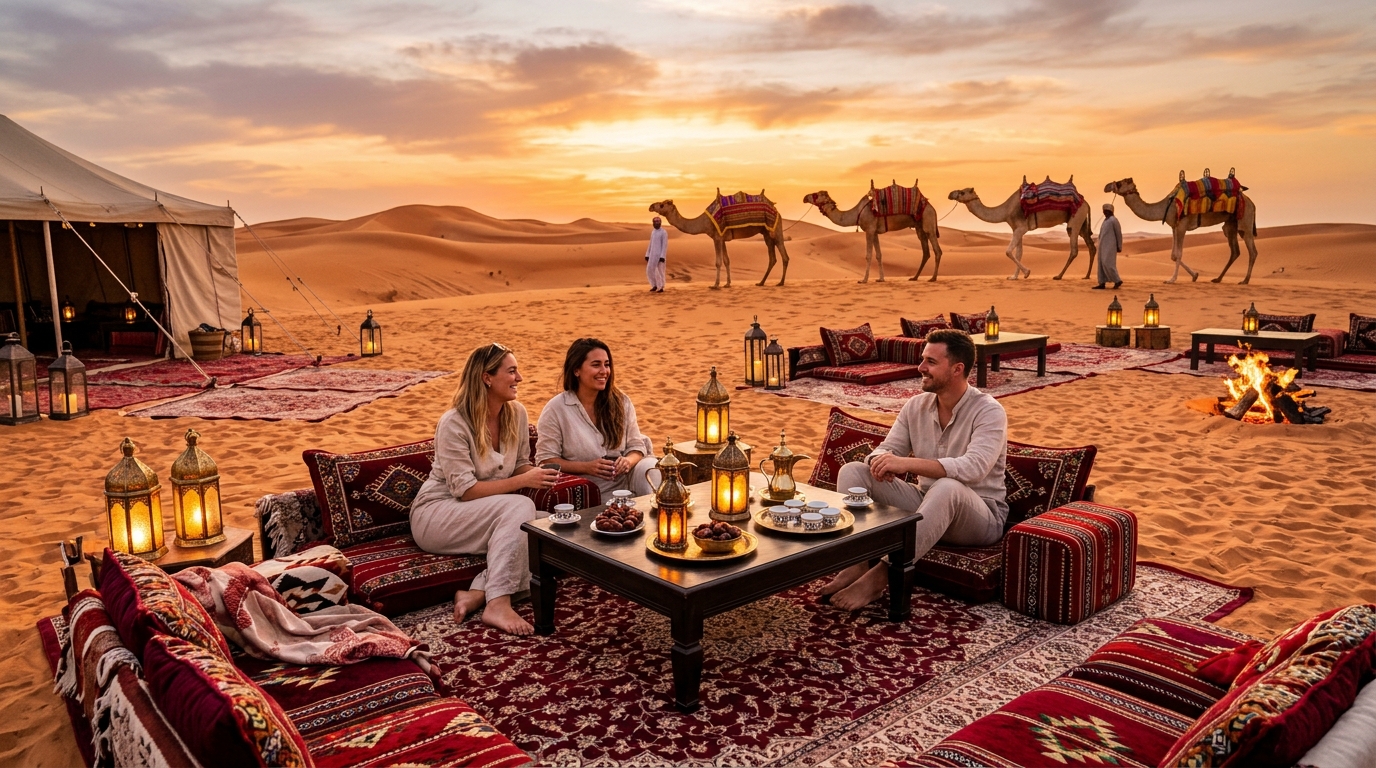
Today, camel trekking in Dubai offers international travelers an immersive bridge into this ancient maritime-style land transit. Mounted on traditional woven saddles atop a camel standing over two meters tall, riders experience the hypnotic, rhythmic swaying gait of the dromedary as a caravan winds slowly across untouched sand dunes, away from engine noise and city skylines.
The Arabian Dromedary: Biology and Cultural Heritage
The camels utilized for tourism and heritage throughout the UAE belong exclusively to the single-humped species: Camelus dromedarius. These remarkable creatures are masterpieces of evolutionary engineering tailored to survive hyper-arid environments:
- Fat Storage, Not Water: A common misconception is that a camel's hump stores drinking water. In reality, the hump stores up to 35 kilograms of dense adipose fat tissue. Concentrating fat in a single dorsal hump prevents heat insulation across the rest of the body, allowing the camel to thermoregulate efficiently under intense solar heat.
- Padded Foot Biomechanics: Unlike hooved horses or cattle that sink deep into loose sand, camels possess broad, flat, two-toed feet lined with thick fibrous fatty cushions. As the foot strikes the sand, the pad expands outward, distributing body weight over a large surface area and preventing the animal from bogging down.
- Sandstorm Adaptations: Camels possess double rows of interlocking eyelashes and muscular, slit-like nostrils that can be sealed completely shut to block airborne dust during desert gales.
Trekking Locations: Lahbab Red Dunes vs DDCR Conservation
Camel trekking in Dubai is conducted in two distinctly different desert environments:
1. Lahbab Desert Corridor:
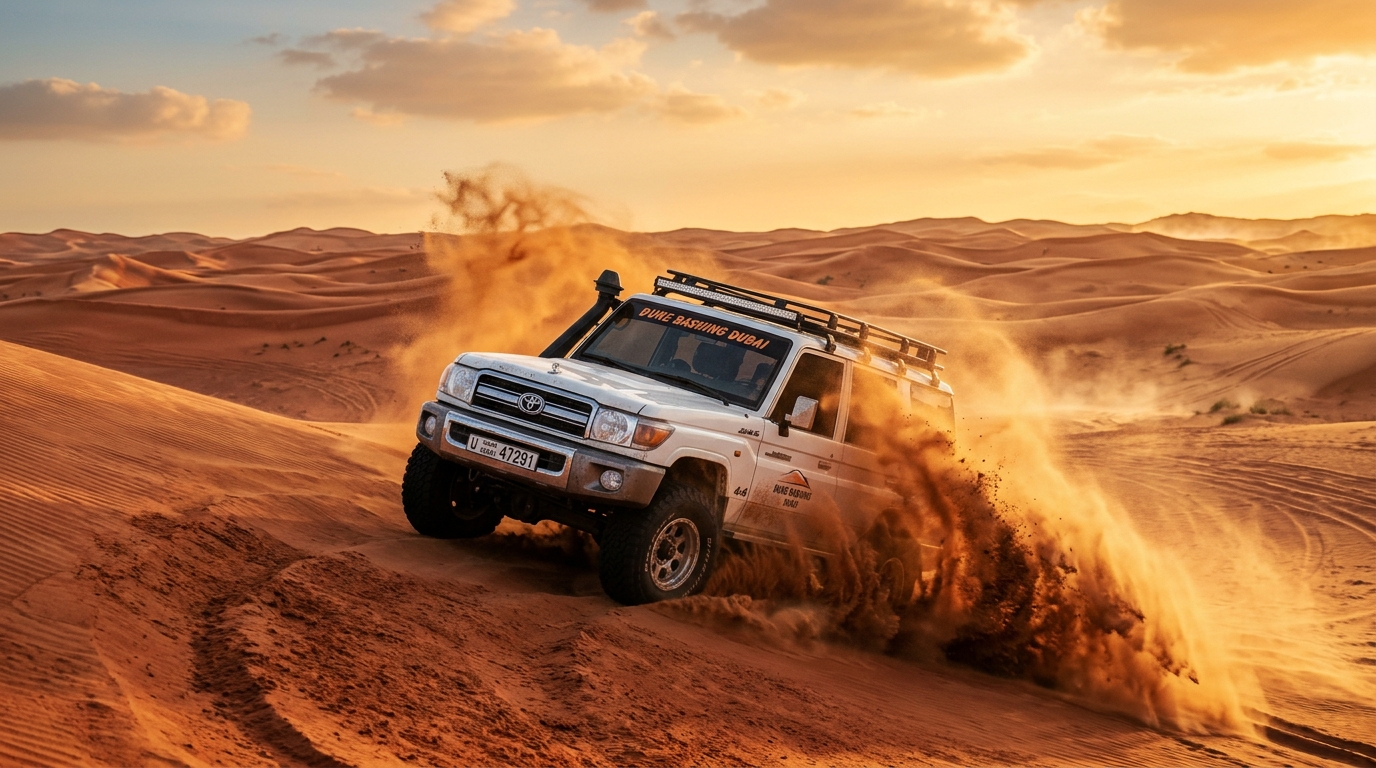
Located approximately 50 kilometers southeast of Downtown Dubai along the Dubai-Hatta Road (E44), Lahbab features steep, rolling crimson sand dunes. Here, camel rides are typically operated around traditional desert camps or staged along dune ridgelines for spectacular sunset photography during morning and evening adventure safaris.
2. Dubai Desert Conservation Reserve (DDCR):
Covering 225 square kilometers of protected natural wilderness, the DDCR offers a quiet, ecologically pristine camel safari. In this national park, motorized dune bashing is strictly forbidden. Camels travel along designated desert trails accompanied by certified conservation guides, allowing guests to spot free-roaming Arabian Oryx, Gordon's wildcats, and gazelles in their undisturbed natural habitat.
Mounting and Dismounting: The Two-Stage Rise
The physical highlight—and most surprising moment—of camel riding is the mounting and dismounting process. Camels are tall animals, and their legs articulate backward and forward in two distinct phases:
- The Mounting Stance: The camel begins resting completely flat on its knees and chest (the couched position). You swing your leg over the saddle, seat yourself securely between the wooden pommel and cantle, and grip the leather-wrapped front handle firmly.
- The Two-Stage Rise: When the camel handler instructs the animal to stand, the camel always straightens its powerful rear legs first. This tilts the rider forward at a steep 45-degree angle. You must lean your upper body backward to counterbalance the shift. A second later, the camel straightens its front legs, lifting your torso upward and leveling the saddle. Reversing this sequence occurs upon dismounting, where the front legs fold first, requiring you to lean back firmly until the animal is fully seated.
Animal Welfare Standards and Weight Thresholds
Dubai tourism authorities enforce comprehensive animal welfare regulations to guarantee that working camels are treated humanely, healthy, and never overexerted:
- Weight Limits: While UAE federal law protects animals from overloading, exact guest weight thresholds are established by individual safari operators and conservation reserves. Reputable desert operators typically implement guidelines capping individual rider weight between 100 kg and 120 kg (220 to 265 lbs) to ensure camel comfort and prevent spinal fatigue.
- Mandatory Rest & Hydration: Operating hours are restricted during peak summer midday heat. Camels receive mandatory rest periods between caravans, unrestricted access to fresh potable water, nutritional fodder, and regular veterinary checkups supervised by the Dubai Municipality Veterinary Services Section.
- Humane Handling: Striking, overloading, or using coercive handling equipment is strictly banned under UAE federal animal protection legislation (Federal Law No. 16 of 2007 on Animal Welfare).
Child Safety Guidelines and Health Exclusions
While camel riding is a peaceful, slow-speed excursion, physical motion and saddle height warrant clear safety boundaries:
- Age Guidelines: While there is no single federal age law for camel riding, licensed safari operators apply practical safety criteria. Many conservation operators establish that children aged 5 and older can ride in their own solo saddle under the direct supervision of a walking guide. Children aged 3 to 4 years may ride tandem with an adult parent or guardian, or remain in safari camp areas or support vehicles depending on the operator's specific tour rules.
- Health Exclusions: Because of the distinct rocking gait and the pronounced forward/backward jolt during standing and kneeling, operators advise against camel riding for pregnant women, particularly past the first trimester (with luxury conservation operators like Platinum Heritage restricting camel rides for guests more than 6 months pregnant), as well as individuals with severe chronic spinal conditions.
What to Wear and What to Bring
Proper clothing ensures comfort and prevents skin irritation while mounted on coarse woolen saddles:
- Long Trousers Mandatory: Always wear full-length cotton pants, chinos, or jeans. The camel's wool saddle blanket is coarse, and direct contact with bare legs can cause uncomfortable chafing during an extended 45-minute trek.
- Footwear: Wear closed-toe sneakers, trainers, or sports shoes. Open sandals or flip-flops can easily slip off your feet while hanging from the stirrups high above the sand.
- Sun Protection: A wide-brimmed hat, high-SPF sunscreen, and polarized sunglasses are essential against bright desert sand glare. During winter evenings (November to March), desert temperatures drop rapidly after sunset, so carrying a light jacket or pashmina is advised.
Camel Ride Formats: Safari Add-On vs Dedicated Caravan
TravelSaga offers two distinct camel experiences to match different traveler preferences:
1. Safari Camp Experience (Introductory Ride):
Included within standard Morning and Evening Desert Safaris. Following 4x4 dune transit, guests enjoy a 10 to 15-minute guided camel loop around the camp perimeter, ideal for photographs, first-time riders, and family memories.
2. Private Heritage Camel Caravan Trek:
An authentic 45 to 60-minute expedition through untouched dunes at sunrise or sunset. Accompanied by a Bedouin handler dressed in traditional kandura, guests travel in a peaceful single-file caravan across pristine desert ridges, concluding with traditional Arabic coffee (gahwa), dates, and majlis relaxation.